Where it all began.
Imec is an organisation that does a lot of research. Some of us research models and applications, then search for the hardware to run them at the edge. It all comes down to one thing: get the model running to validate it. Every time, someone configures the device by hand. That manual overhead has a predictable effect: we reach for the device we already know. Not for lack of curiosity about how it'd perform elsewhere, or what the minimal viable hardware could be but because time is scarce, and production is rarely the destination. Without tooling that makes switching seamless, that curiosity stays unexplored.
That gap, combined with our conviction that hardware and software need to be designed together, is what EdgeLab is built to close.
Hardware and software should be designed together.
Hardware and software are treated as separate problems. You pick a chip and make the software run on it, or you pick a software stack and hope the hardware keeps up. We believe that's outdated and it's already showing strain under today's models, with more strain inevitably coming.
AI models are getting more capable faster than chips can be designed to run them. Model iterations take months, hardware takes years. Unless these two evolve together, that gap becomes the ceiling on how fast we can actually innovate. Especially in domains where latency, connectivity or safety rule out the cloud: robotics, automotive, industrial systems, etc.
Our co-design philosophy treats these as one problem, not two: focus on the optimisation of both hardware and software to achieve the best performance for a given application. This then helps creating scalable systems that can handle increasing demands without compromising on performance.
EdgeLab exists to make those tradeoffs visible to all stakeholders, from AI developers to hardware engineers. Our platform is where that vision materialises: real edge workloads and deployment contexts, not theory, so decisions on both sides are made with real information rather than assumptions.
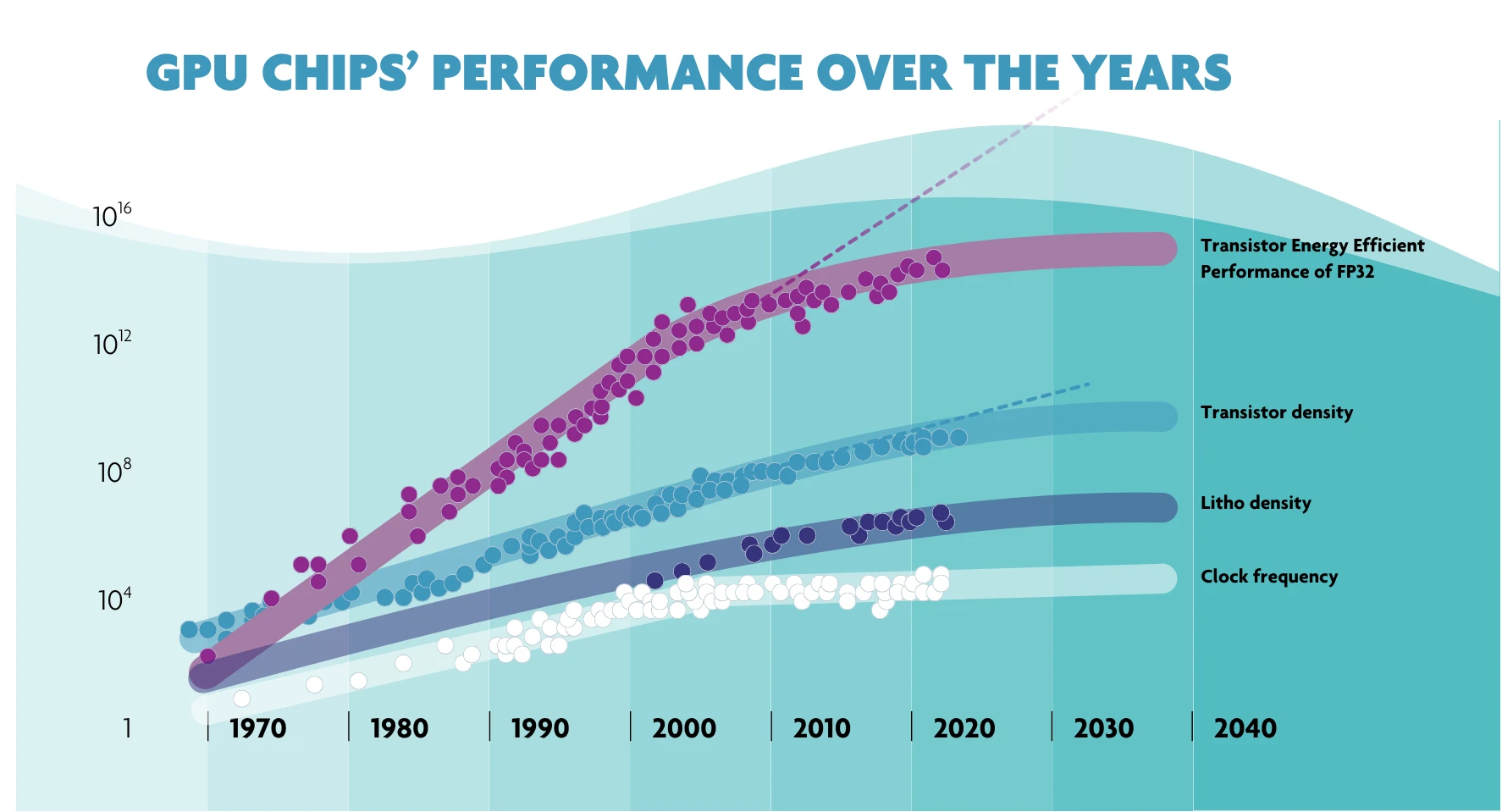
GPU chip's performance over the years. Hardware is meeting its architectural and physical limits.
Open by principle.
Neutral only works if it's real. The moment EdgeLab has a reason to prefer one chip, one stack, or one vendor over another, every result it produces becomes a little less trustworthy to hardware providers deciding where to invest, and to workload teams deciding what to build on.
That's not a new problem for us. imec has operated as an independent research organisation for over 40 years, trusted by the entire semiconductor industry precisely because it isn't owned by any one of them. EdgeLab inherits that same independence, one layer up: the platform runs on open, inspectable foundations instead of anything proprietary: Kairos as the OS layer (we're an official adopter and contributor, not just a user), Kubernetes-native orchestration, and GitOps pipelines. Hardware support spans every major vendor, not just the ones we happen to have a relationship with.
That's what makes the numbers EdgeLab produces worth trusting.



Ready to test?
EdgeLab is currently in beta and available to a limited group of partners as we refine the platform. Tell us about your workload or hardware questions, and we'll get back to you within a few business days.